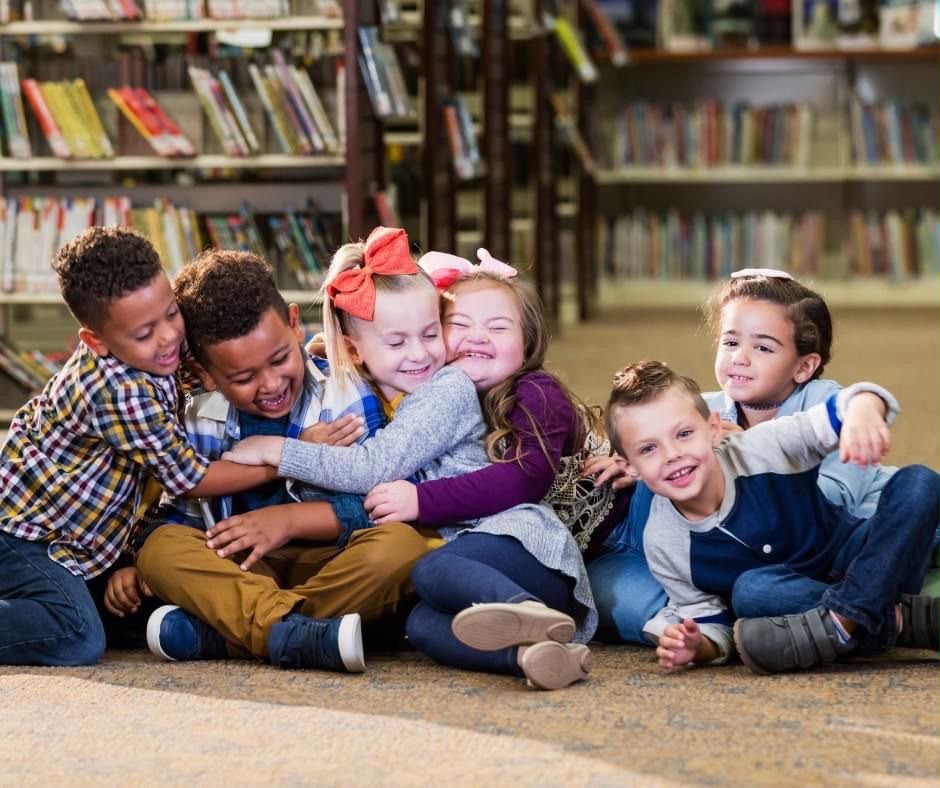
Getting along with others isn’t something children are born knowing how to do – it’s a skill they build with practice, the same way they learn to walk or talk. One of the quieter benefits of group child care is just how many chances it gives children to practice that, every single day.
Repeated, Everyday Opportunities to Interact
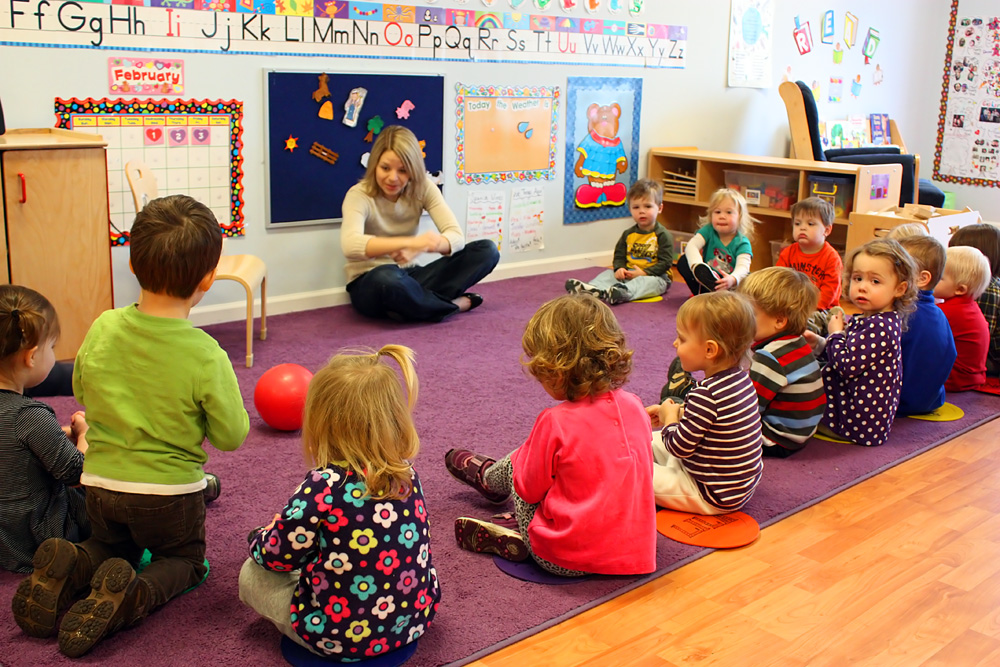
In a classroom, children are surrounded by peers all day – at circle time, during play, at snack. That means dozens of small social moments to practice in, not just one or two a week.
Taking Turns and Sharing
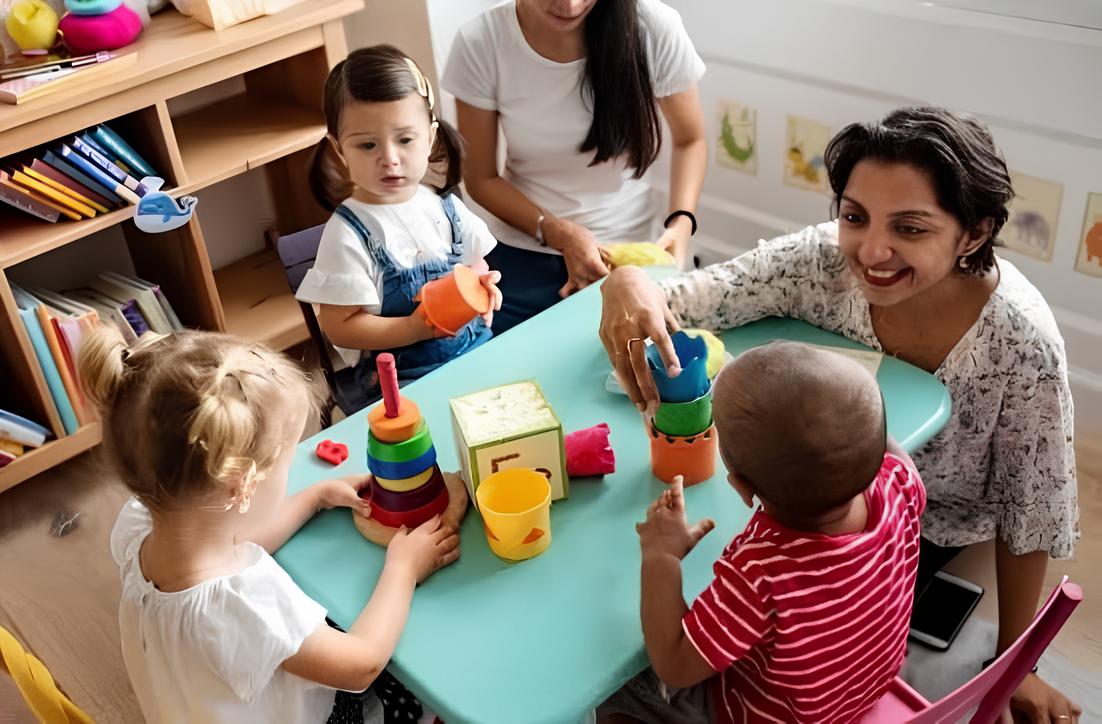
Whether it’s waiting for a turn on a tricycle or sharing a box of crayons, these small moments add up to real practice in patience and fairness.
Using Words to Ask, Join, or Play
Children learn simple, useful phrases like “can I have a turn?” or “can I play too?” – tools they’ll use well beyond the classroom.
Working Through Everyday Disagreements
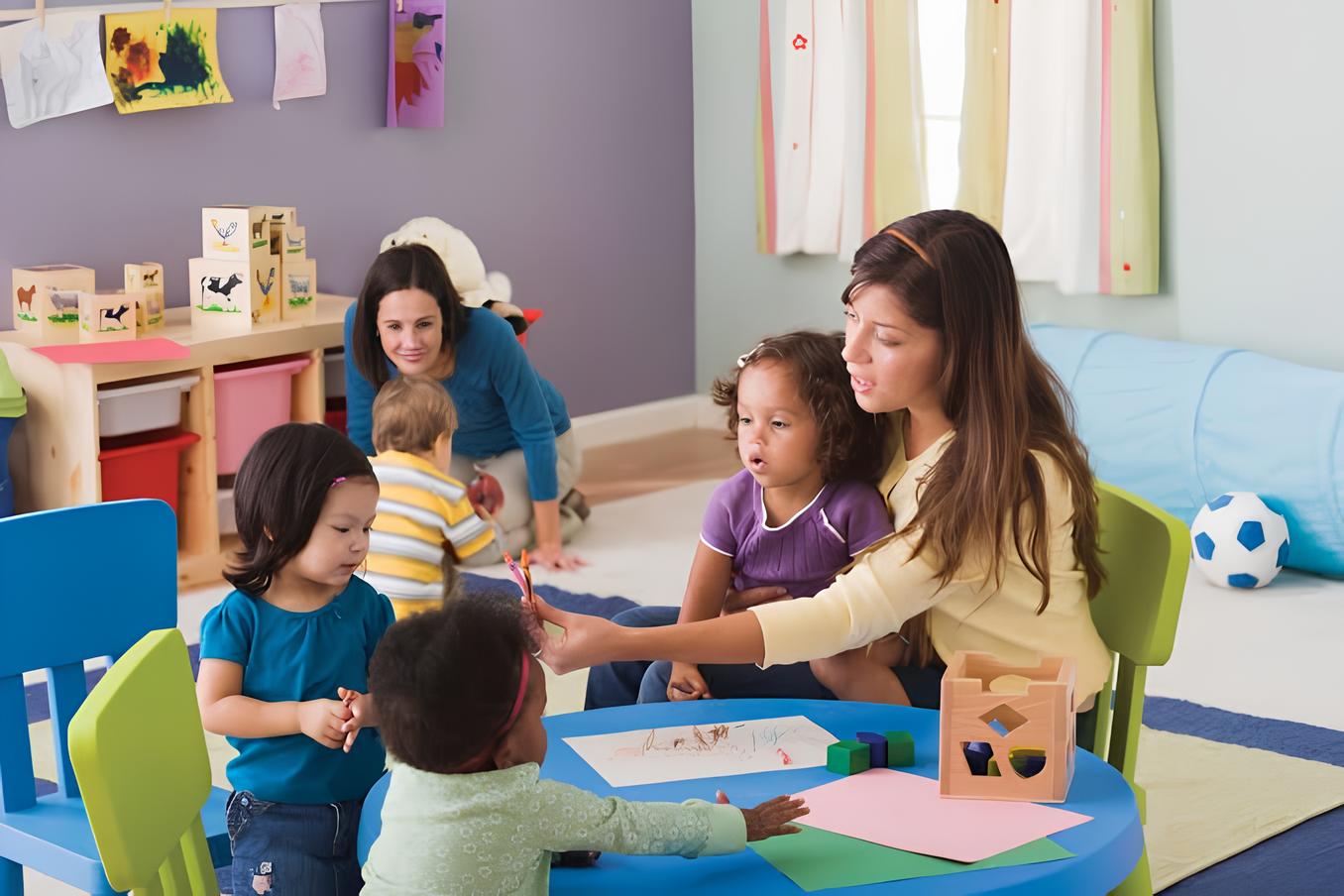
Small disagreements over toys or turns are a normal part of childhood. With a teacher nearby to guide the conversation, children get practice naming how they feel and working toward a solution together.
Participating in Group Routines
A wonderful program still needs to work wLining up, cleaning up together, and following along at circle time all teach children how to be part of a group – a skill that will matter in every classroom they walk into later.ith your family’s daily life.
Building Comfort with Different Adults and Peers
Spending time with different teachers and classmates helps children grow more comfortable meeting new people and adapting to new situations.
How Our Teachers Model Respectful Communication
Children learn a lot just by watching. When teachers model kind, clear language – listening fully, naming feelings, offering choices – children pick up that same way of talking with others.
How Parents Can Reinforce This at Home
You can build on this at home too: narrate feelings (“it looks like you’re frustrated”), practice taking turns during family games, and praise moments when your child shares or includes someone.