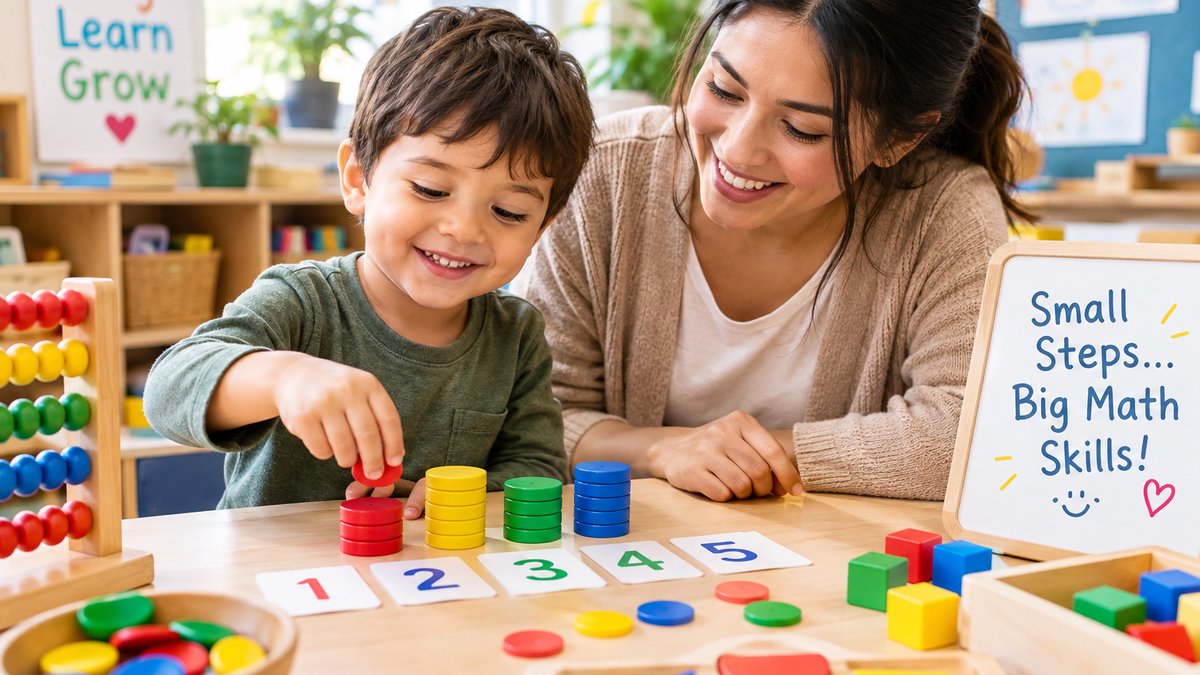
Have you ever noticed your child counting their snacks, sorting toys by color, or pointing out shapes while playing? These little moments might seem simple, but they’re also opportunities for children to begin understanding math!
When we think about math, we often picture numbers on a worksheet, counting exercises, or learning how to add and subtract. But for young children, math starts much earlier than that. It begins with exploring the world around them, asking questions, noticing patterns, and figuring out how things work.
The good news? You don’t need special toys, complicated activities, or a formal lesson to help your child build early math skills. Everyday routines at home and in child care can provide plenty of opportunities to explore numbers, shapes, sizes, and patterns in a fun and natural way.
At Small World Child Care Centers, we believe that everyday experiences can make learning meaningful for young children. Let’s look at some simple ways to encourage early math skills through play and discover how you can bring a little math into your child’s day!
Counting Can Start With the Little Things
One of the first math skills children begin exploring is counting. And while it might be tempting to think counting only happens when a child sits down to practice numbers, it can happen almost anywhere!
You can count crackers during snack time, count blocks while building a tower, or count steps as you walk from one room to another. Even putting toys away can become a fun counting activity.
For example, you might say, “Let’s put three blocks in the basket. Can you help me count them?” As your child picks up each block, count aloud together: one, two, three!
At first, your child might skip numbers, repeat them, or count the same object more than once. That’s perfectly normal as they learn. The goal isn’t to get every number right immediately. It’s to help them become familiar with numbers and understand that counting connects to real objects.
Try this at home: During snack time, count how many apple slices or crackers your child has. Ask, “How many do we have?” or “What happens if we add one more?” Keep it playful and follow your child’s interest rather than turning snack time into a test.
Over time, these small interactions can help children become more comfortable with numbers and begin connecting number words to quantities.
Sorting Toys Helps Children Notice Patterns
Have you ever watched your child line up their toy cars, group building blocks by color, or separate stuffed animals from other toys? These activities are more than just play. They give children opportunities to practice sorting, matching, and recognizing similarities and differences.
Sorting is an important early math concept because it helps children learn to organize information. They begin noticing that objects can belong together because they share a color, shape, size, or other characteristic.
You can introduce this skill with everyday objects. Ask your child to put all the red blocks in one pile and the blue blocks in another. During cleanup, invite them to place books on one shelf and toys in a basket. You can even sort clean socks by color or match pairs together while doing laundry.
As your child becomes more comfortable, introduce a different way to sort the same objects. For example, blocks that were grouped by color can now be grouped by size.
You can ask simple questions such as:
1. “Which toys belong together?”
2. “Can you find all the toys that are the same color?”
3. “How are these two objects alike?”
4. “Can we sort these in a different way?”
These questions encourage children to look closely, make comparisons, and explain what they notice.
Try this at home: Gather a few safe household objects or toys and invite your child to sort them into groups. There’s no need to make it complicated. Let your child decide how to organize the objects, then talk together about their choices.
Remember, the goal is to explore and discover. There may be more than one way to group the objects, and that’s part of the fun!
Shapes Are Everywhere
Circles, squares, triangles, and rectangles aren’t just shapes children see in books or on flashcards. They’re all around us!
A plate might look like a circle. A window might look like a rectangle. A block might have square sides, and a triangular road sign might remind your child of the shape they saw during playtime.
Helping children recognize shapes begins with pointing out these everyday examples. You don’t need to sit down for a formal lesson. Simply noticing shapes together can make learning more engaging.
While playing with blocks, you might ask, “Can you find a block with a square side?” During a walk, you could look for circular wheels, rectangular doors, or other shapes you notice along the way.
Arts and crafts can also provide opportunities to explore shapes. Children can arrange paper shapes, build pictures using different pieces, or use blocks to create their own designs.
As they explore, children begin learning that shapes have different characteristics. They may notice that a triangle has three sides or that a circle has a curved outline. These observations help build the foundation for more advanced geometry concepts later on.
Try this at home: Go on a simple shape hunt around your house. Ask your child to find something round, something square, or something shaped like a rectangle. You can take turns finding objects and naming their shapes.
And don’t worry if your child doesn’t remember every shape right away. Repeated, relaxed exposure gives them more chances to recognize and understand what they see.
Big, Small, More, and Less: Learning Through Comparison
Early math isn’t only about recognizing numbers. It also involves comparing objects and understanding how things relate to one another.
Children naturally encounter these ideas when playing with toys, sharing snacks, building towers, or helping with everyday tasks.
For example, you might place two towers of blocks beside each other and ask, “Which tower is taller?” You could compare two toys and ask which one is bigger, or look at two groups of objects and talk about which group has more.
These simple conversations introduce words such as bigger, smaller, taller, shorter, more, less, and same. They also encourage children to observe carefully and explain what they notice.
You can introduce comparisons during snack time, too. If your child has two small groups of crackers, count them together and discuss which group has more. As they become more familiar with the idea, you can explore what happens when you add or take away an item.
The key is to connect these concepts to things your child can see and touch. Concrete examples often make abstract ideas easier for young children to explore.
Try this at home: While building with blocks, ask your child to make one tower taller than another. During cleanup, compare which basket has more toys. You can also use everyday phrases such as, “Your cup is bigger than mine,” or “We have the same number of spoons.”
These little conversations help children become more familiar with mathematical language without making learning feel like a chore.
Playtime Is a Great Opportunity to Explore Math
Play gives children room to experiment, make choices, and discover new ideas. It also creates natural opportunities to explore early math concepts.
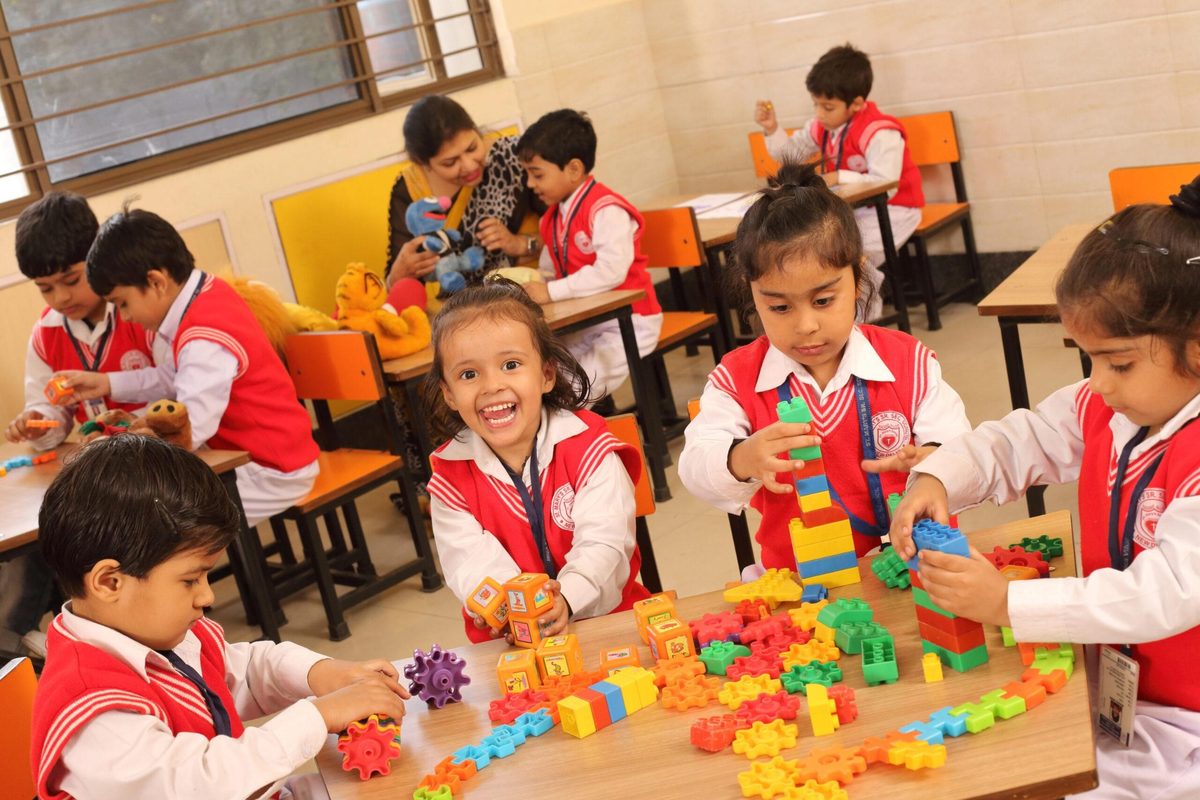
Building blocks, puzzles, pretend kitchens, toy cars, and other play materials can all encourage children to count, compare, sort, and recognize patterns.
Imagine your child building a tower with blocks. They might count how many blocks they use, notice that one tower is taller than another, or figure out how to balance a block without making the whole structure fall.
During pretend play, children might arrange toy food, count pretend coins, set out plates for a pretend meal, or decide how many cups are needed for everyone at the table.
Even simple puzzles can encourage children to recognize shapes, compare pieces, and figure out where each piece belongs.
These experiences allow children to explore math while also practicing other important skills, such as problem-solving, communication, patience, and creativity.
Try this at home: Let your child choose a favorite activity and look for opportunities to introduce math naturally. If they enjoy building, count blocks together. If they love pretend cooking, count ingredients or arrange items by size. If they enjoy puzzles, talk about the shapes and patterns they notice.
You don’t have to direct every step. Sometimes the best thing you can do is provide the materials, join in the fun, and let your child lead the way.
Everyday Routines Can Become Learning Moments
Some of the easiest opportunities to explore math happen during routines that families already do every day.
Getting dressed, preparing meals, cleaning up, and spending time outdoors can all provide chances to practice early math concepts.
While getting dressed, your child can match socks, compare shoe sizes, or count the buttons on a shirt. During mealtime, they can help count utensils, arrange napkins, or figure out how many cups are needed.
Cleanup can involve sorting toys into groups, counting items as they go into a basket, or matching objects to their proper places.
Outdoor play offers even more possibilities. Children can count steps, compare the sizes of leaves, notice repeating patterns, or look for shapes in their surroundings.
These activities are especially helpful because they connect learning to experiences children already understand. Instead of memorizing an idea in isolation, they get to see how it applies to everyday life.
Try this at home: Choose one routine each day and look for a small way to include math. You might count the steps to the front door, sort toys before bedtime, or ask your child to help count the plates before dinner.
There’s no need to add another task to your already busy schedule. Simply make the most of the moments you already share.
Ask Questions and Give Children Time to Think
As parents and caregivers, we naturally want to help children find the right answers. But when it comes to early learning, asking questions and giving children time to explore can be just as valuable.
Instead of always telling your child what to do, try asking open-ended questions that encourage them to think.
For example, while building with blocks, you could ask, “What do you think will happen if we add another block?” During sorting activities, try, “How else could we group these toys?” While counting snacks, ask, “How can we find out how many we have?”
These questions encourage children to observe, experiment, and explain their thinking.
And if your child gives an unexpected answer, that’s okay! You can explore the idea together, count again, compare objects, or try a different approach.
It’s also important to give children time to respond. Young learners may need a few moments to process a question, examine the objects in front of them, and decide what to say.
Try this at home: During playtime, pause occasionally and ask your child what they notice. Follow up with questions that begin with “how,” “what,” or “which.” Keep the conversation light and enjoyable, and celebrate their curiosity as much as their answers.
The goal isn’t to make every moment a lesson. It’s to show children that asking questions, exploring ideas, and trying again are all valuable parts of learning.
Every Child Learns at Their Own Pace
One child might love counting everything they see, while another may be more interested in building, sorting, or exploring shapes. Both can be valuable ways to begin discovering math.
Young children develop new skills at different rates, and their interests can change from day to day. Some may quickly recognize familiar shapes, while others need more time and repeated opportunities to explore them.
Rather than comparing your child with other children, focus on making learning enjoyable and meeting them where they are.
If your child loses interest in counting, try a different activity. If they enjoy sorting toys, let them spend more time exploring that concept. If they make a mistake, offer encouragement and help them try again when they’re ready.
Small moments of practice can add up. The important thing is to create opportunities for curiosity, exploration, and positive experiences with learning.
At home and in child care, children benefit from having caring adults who encourage their questions, recognize their efforts, and give them room to discover new things.
How Small World Child Care Centers Supports Early Learning
Early learning happens in many ways, and play is one way young children can explore ideas, practice new skills, and make sense of the world around them.
At Small World Child Care Centers, children have opportunities to participate in experiences that encourage curiosity, creativity, interaction, and exploration. Everyday play can give children opportunities to notice patterns, work with objects, ask questions, and discover new ideas.
Whether children are building, creating, playing with others, or participating in group activities, these experiences can help introduce concepts they will continue exploring as they grow.
Every child’s learning journey is different. What matters is providing a supportive environment where children can explore, practice, and build confidence as they discover new things.
If you’re looking for child care that values early learning and meaningful everyday experiences, we invite you to learn more about Small World Child Care Centers and explore the programs available for your family.
Making Math Part of Everyday Childhood
You don’t need worksheets, complicated materials, or a perfect activity plan to help your child begin exploring math. Sometimes, it’s as simple as counting crackers at snack time, sorting toys during cleanup, finding shapes on a walk, or building a tower together.
These everyday moments give children opportunities to become familiar with numbers, patterns, shapes, and comparisons while enjoying time with the people around them.
So the next time your child starts counting their toys or asking which object is bigger, take a moment to explore the question together. You might be surprised by how much learning can happen during ordinary play!
Ready to learn more about Small World Child Care Centers? Contact your preferred location to ask about available programs and schedule a tour to see the learning environment for yourself.
Math to the Playground
Explore counting swings, comparing heights, noticing shapes, and collecting or sorting natural objects during outdoor play.
How Parents Can Encourage Math Through Play
Encourage parents to ask simple questions, let children explore at their own pace, and make math part of everyday conversations without turning it into a formal lesson.
Conclusion: Small Moments Build Big Foundations
Reinforce that everyday play offers children opportunities to become curious about numbers, shapes, patterns, and relationships.
Suggested CTA
Want to learn more about how young children learn through everyday experiences? Explore Small World Child Care Centers and discover how play can support your child’s early learning journey.